''YOUTUBE MONETIZATION POLICY: A SIMPLE GUIDE FOR BEGINNERS''
- Karan Mishra
- 19/8/2026
- One Comment
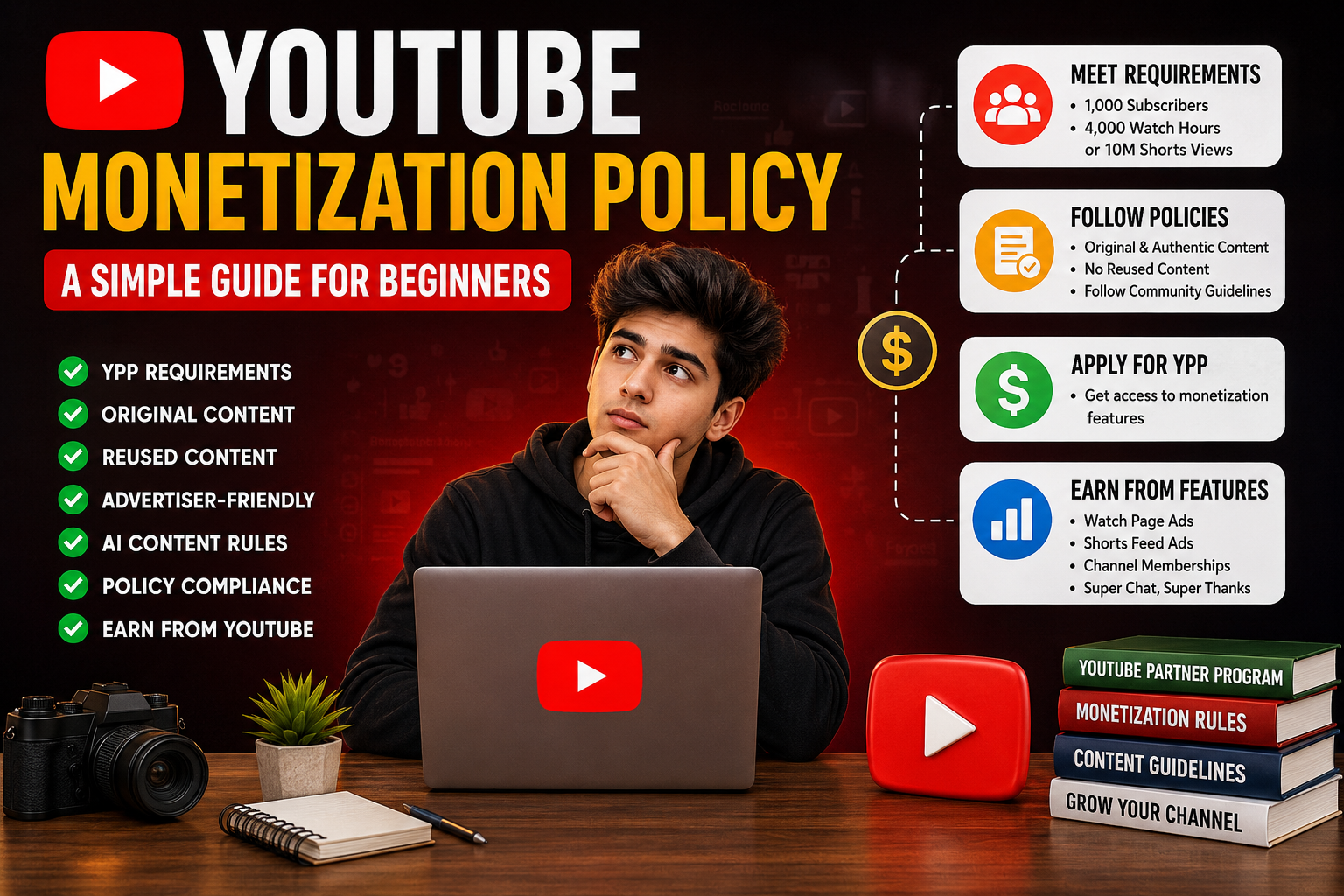
Table of Contents
INTRODUCTION
YouTube is not only a platform for watching videos. Today, many creators also use YouTube to build an audience and earn money from their content.
But getting views and subscribers is not the only thing. If you want to earn money from YouTube, you also need to understand the YouTube Monetization Policy.
In simple words, YouTube checks whether your content is original, useful, advertiser-friendly and follows its monetization rules. If your content does not follow these policies, your channel or individual videos may not be eligible for monetization.
So, before focusing only on views, creators should understand how YouTube monetization actually works.
WHAT IS YOUTUBE MONETIZATION?
YouTube monetization means earning money from eligible content through the YouTube Partner Program (YPP) and its available monetization features.
Depending on eligibility, creators can access features such as channel memberships, Super Chat, Super Thanks and Shopping. Higher eligibility levels can also provide access to Watch Page ads, Shorts Feed ads and YouTube Premium revenue.
So basically:
Create Content → Build Audience → Meet Eligibility → Follow Policies → Apply for YPP → Earn Through Eligible Features
WHAT IS THE YOUTUBE PARTNER PROGRAM?
The YouTube Partner Program, also called YPP, is the program through which eligible creators can access YouTube’s monetization features.
For the main ad-revenue level, YouTube currently lists these requirements:
1,000 subscribers
Either 4,000 valid public watch hours in the last 12 months
Or 10 million valid public Shorts views in the last 90 days
YouTube also has an expanded YPP level with lower thresholds for some features. However, reaching the numbers alone does not guarantee approval because YouTube also reviews the channel for policy compliance.
WHY IS ORIGINAL CONTENT IMPORTANT?
One of the biggest things creators should understand is original and authentic content.
YouTube’s monetization policies do not support channels that mainly upload repetitive or mass-produced content without meaningful value. Content should give viewers something useful, educational, entertaining or creatively different.
For example, if a creator keeps making almost the same type of video again and again using a similar template with very little new value, it can create a monetization problem.
The main idea is simple:
Don’t just produce content. Add your own value to it.
WHAT IS REUSED CONTENT?
Reused content means using content that already exists online without adding enough original commentary, meaningful changes or educational or entertainment value.
For example, simply collecting clips from other creators and uploading them with very little commentary may not qualify for monetization.
But content can sometimes be monetizable when the creator adds meaningful transformation, such as commentary, analysis, criticism, storytelling or substantial editing. YouTube also makes clear that reused-content monetization rules are separate from copyright rules.
So remember:
COPY + SMALL CHANGES ≠ ORIGINAL VALUE
ORIGINAL CONTENT + MEANINGFUL VALUE = BETTER MONETIZATION POTENTIAL
WHAT CONTENT CAN HAVE LIMITED OR NO AD REVENUE?
Even if your channel is in the YouTube Partner Program, every video is not automatically guaranteed full ad revenue.
YouTube’s advertiser-friendly guidelines cover areas such as inappropriate language, violence, adult content, shocking content, harmful or unreliable content, hateful or derogatory content, drugs, firearms-related content, controversial issues and sensitive events.
YouTube can classify a video as having limited ad earnings or no ad earnings depending on whether the content is suitable for advertisers.
This is why creators should think about the complete content, not just the video itself.
YouTube says its systems can consider the:
Video
Title
Thumbnail
Description
Tags
when assessing advertiser-friendly content.
YOUTUBE MONETIZATION AND AI CONTENT
AI tools can be useful for creating content, but simply using AI does not automatically make content monetizable.
The important thing is the final content. YouTube says content made with automated tools or templates can still be eligible when it demonstrates the creator’s creative vision and provides educational or entertainment value.
So if you are using AI for scripts, visuals, editing or other parts of your workflow, focus on adding your own ideas, creativity and useful information.
HOW TO CREATE A YOUTUBE MONETIZATION-FRIENDLY CONTENT PLAN
Here we can apply the blog clusterization concept from the first PDF.
Instead of randomly making videos, choose one main topic and create related supporting topics around it.
For example:
PILLAR TOPIC: YouTube Monetization
Supporting topics can be:
YouTube Partner Program
YouTube Monetization Policy
Reused Content
Original Content
YouTube Shorts Monetization
Advertiser-Friendly Content
YouTube Copyright Basics
This creates a connected content structure instead of random videos.
One main topic → multiple useful supporting topics.
ON-PAGE SEO FOR A YOUTUBE MONETIZATION BLOG
According to the Yoast-style on-page SEO framework in the provided PDF, the focus keyword should naturally appear in important places such as the title, URL, meta description, early content and headings.
For this blog:
Focus Keyword: YouTube Monetization Policy
SEO Title: YouTube Monetization Policy: Beginner Guide
Suggested URL:/youtube-monetization-policy
Meta Description:
Learn YouTube Monetization Policy in simple words, including YPP requirements, original content, reused content and monetization rules.
The content should also use a clear H1, H2 and H3 structure so both readers and search engines can understand the page easily.
QUICK CHECKLIST FOR CREATORS
Before trying to monetize your YouTube channel, check these points:
Create original and useful content.
Avoid highly repetitive or mass-produced videos.
Add meaningful commentary or value when using existing content.
Follow YouTube Community Guidelines and monetization policies.
Make sure your content is suitable for advertisers when enabling ads.
Don’t depend only on views and subscribers.
Keep your titles and thumbnails relevant to the actual content.
Understand the difference between copyright and reused-content policies.
Build content around useful topics instead of randomly uploading videos.
Keep improving your content quality and audience value.
CONCLUSION
YouTube monetization is not simply about reaching a specific number of subscribers or views.
The bigger thing is content quality, originality, audience value and following YouTube’s policies.
If you are a beginner, don’t focus only on making videos quickly. First understand your topic, create useful content, add your own perspective and build a proper content structure.
In simple words:
Original Content + Audience Value + Consistency + Policy Compliance = Better YouTube Monetization Journey
YouTube policies can change over time, so always check the latest official YouTube rules before making important monetization decisions.
CALL TO ACTION
If you are planning to start your YouTube channel or want to improve your existing channel, start by understanding the YouTube Monetization Policy properly.
JOIN VIDY SARTHI INSTITUTE OF DIGITAL EDUCATION
Don’t just chase views.
Create something valuable, make it original and give your audience a reason to come back.

One Response
karan mishra this guide is the best guide for youtube recent guidence